

Prospects of a Green-left electoral pact
On Saturday 11 October, recently elected Green Party leader Zack Polanski and Zarah Sultana, co-founder of the new left-wing Your Party, spoke at an event at Ascension Church in Hulme, Manchester.
Entitled ‘Uniting to Win: Red/Green Alliances & New Popular Fronts’, the event was organised by The World Transformed and explored whether left-wing parties could unite under an electoral coalition to take on the far right.
Speaking first, Zarah Sultana made it clear that Your Party would be willing to enter some form of electoral pact with the Greens:
“There is enough room for both of us on the left and we have to work together. There are places where the Greens will stand and it will make sense for us not to stand—we have to be strategic.”
The Greens, she argued, would likewise need to stand down for Your Party parliamentary candidates who are popular in their communities and have a realistic chance of winning seats.
As examples, she pointed to Jamie Driscoll in the North East and Andrew Feinstein, who aims to unseat Keir Starmer in his Holborn and St Pancras constituency.
Both Sultana and fellow panellist Hilary Schan, chair of We Deserve Better, cited Wes Streeting’s retention of his Ilford North seat by just 528 votes in the 2024 general election as evidence of the critical need for an electoral pact.
Had the Green Party, who received 1794 votes, not stood, independent candidate Leanne Mohamad would have unseated the health secretary and dealt a blow to the Labour leadership.
What sets them apart?
Sultana was particularly eager to differentiate Your Party from the Greens.
This follows the chaos of her unilateral membership launch, her subsequent public spats with Jeremy Corbyn over social media after he encouraged new members to cancel their direct debits, and her characterisation of the party’s leadership as a ‘sexist boys club’.
With many of the new party’s disillusioned supporters turning instead to the Greens, Sultana sought to justify the continued need for its existence within the current political landscape.
Your Party, Sultana argued, is ‘explicitly socialist, unapologetically class-based and firmly anti-imperialist’ and comes from a different political tradition than the Greens.
She offered three key areas where she claims her party has distinct policy differences with the Green Party:
1. Party Democracy - To ensure the sovereignty of the party conference and its decisions, 'Your Party' will enforce a whipping system on MPs and councillors, forcing them to vote in line with the will of members.
‘Political representatives must be the democratic conduit of members to exercise their vote’, Sultana declared.
This is in contrast to the Greens, who allow MPs and councillors to vote with their conscience, which Sultana argues prevents true party democracy.
Additionally, MPs and councillors will be subject to mandatory re-selection to confirm local party members’ continued confidence in them.
2. NATO - Unlike the Green Party—which argues on their website that NATO has an important role to ensure member states can respond to security threats—Sultana demands that the UK must leave NATO immediately.
‘You can’t greenwash NATO,’ she argued, ‘it is a military alliance built to defend imperial power and project Western dominance, in which only arms manufacturers profit from death and destruction.’
3. Israel - In response to Israel’s genocide in Gaza, Sultana advocates the immediate expulsion of the Israeli ambassador and an end to diplomacy and trade with the State of Israel.
She was critical of Zack Polanski for previously saying he supports the maintaining of diplomatic relations.
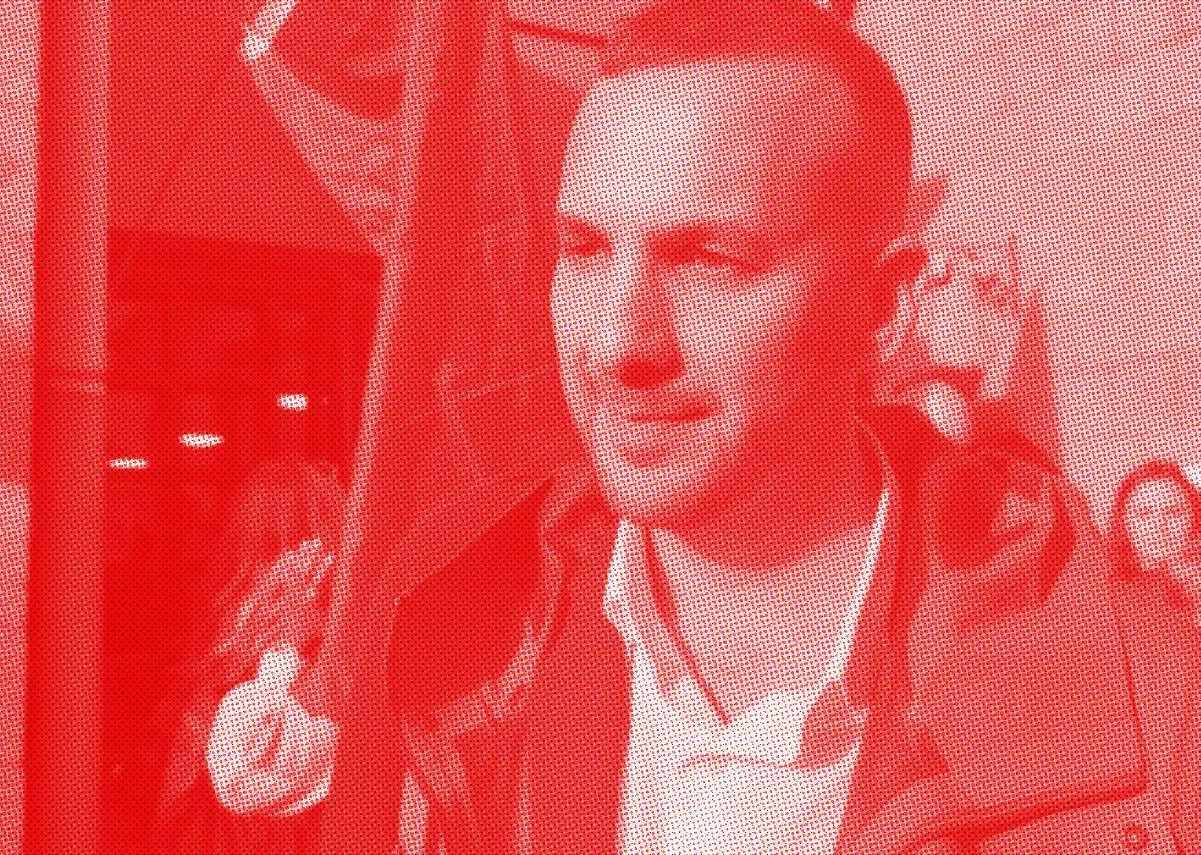
Zack Polanski @ The World Transformed © Emily Shillcock
Polanski’s Response
Polanski initially avoided directly talking about what a left-wing electoral popular front may look like, instead focusing on why the Greens are embracing what he describes as left-wing populism under his new leadership.
‘You can’t be an environmentalist without caring about inequality’, he argued, ‘There is no environmental justice without racial, social and economic justice too.’
He then pushed back on the areas of difference highlighted by Sultana, suggesting distinctions between both parties were not nearly as significant as she claimed.
On party democracy, Polanski asserted that the Greens’ party conference is sovereign, with one member, one vote.
He added, ‘We do have mandatory re-selections so our MPs, our councillors and our candidates are absolutely accountable to the membership and the decisions they make.’
Polanski also stated that as someone who wants a world without nuclear weapons, he does not support being a NATO member.
Referring back to party democracy, he noted that a motion on NATO membership was set to be voted on at the recent party conference.
Due to time constraints, the debate was postponed to the next conference, though this means the Greens may also be in favour of NATO withdrawal in the near future.
While the Green Party leader condemned Israel’s genocide and occupation, and called for an end to UK arms dealing and intelligence sharing with Israel, he justified the need for continued diplomacy:
‘When I talk about diplomatic ties, this is about diplomatic ties with any country, no matter how much I might despise their leadership, no matter how much I am demanding we stop the arms trade with them.
I think any peace process ultimately needs to make sure the right people are around the table, and the right people there are clearly the Palestinians and the Israelis.’
He finally addressed the issue of a possible alliance with 'Your Party'.
‘I am hearing a strong need and want for cooperation - well the good news is that we’re already chatting’, Polanski said, joking that recently he has been hanging out with Zarah Sultana more than his own boyfriend.
While he spoke of a dialogue between the Greens and Your Party, Polanski refused to commit to a formal electoral pact:
‘It’s just too far away to say, I don’t know what Your Party are going to stand for, I don’t know what their policies are going to stand for.
I think it’s very likely, I can’t imagine a situation where we won’t be at least talking, in fact we will definitely be talking, and making those informal arrangements.’
Presumably Polanski is hesitant to agree terms of a pact prematurely, while his popularity and profile is on the rise, his party’s membership is increasing, and Your Party’s future is uncertain.
By waiting closer to the election, he hopes to maximise the Greens’ position in any formal or informal pact or popular front.
‘Lots of the audience saying: Fascism is creeping up and we have to move, and we do have to move, but I think crucially we have to get it right. With any rushed decisions, we end up with bad decisions’, Polanski quipped, in a possible sleight against Your Party’s fumbled membership launch.
Zarah's Redlines
Polanski encouraged Sultana to join the Greens, to which she replied that she is unable to join a party that does not advocate immediately leaving NATO and ceasing all diplomacy and trade with Israel.
While these policy issues are significant, they seemed a somewhat arbitrary place to draw the line.
It is a selective argument to suggest that these positions prove Your Party is the only socialist project, particularly after Polanski had pushed back on the extent of both parties’ divergence in these areas.
Further, as important as NATO and Israel are, they are but two of a myriad of issues which socialists could coherently prioritise and choose to be uncompromising about.
One could just as easily point to the Green Party conference passing a motion to ‘seek the effective abolition of private landlordism’, contrasting Your Party’s embrace of private landlords such as Adnan Hussain MP, as evidence that the Greens represent truer socialist politics by opposing class compromise.
Sultana has founded Your Party with certain key figures who hold socially conservative views and disagree with her on fundamental issues.
After Mr Hussain spoke of the importance of protecting women’s spaces and stated that trans women are ‘not biologically women, hence trans women’ on X, Sultana responded that 'Your Party' is a progressive, socialist party that will defend trans rights, ‘no ifs, no buts’.
While Sultana rejects the views of some of her colleagues on LGBTQ+ rights, she has not made those the dividing line that would prevent her being a member of a party, instead choosing NATO and Israel as areas which her party must be in full alignment with her.
Final thoughts
It remains unclear how closely Your Party and the Greens will work together ahead of the next election.
A pact could range from an informal non-competition agreement, where both parties agree not to stand against the other in certain constituencies; to public endorsements of the other party’s candidates; to a formal electoral agreement with joint candidates, nominated by both the Greens and 'Your Party'.
We Deserve Better chair Hilary Schan suggested that a mixed approach that reflects the specific needs and circumstances of each constituency would be the most successful.
It is hard, however, not to feel like the egos of both parties’ leaderships may prevent them from realising the full potential of uniting the British Left as a powerful electoral force.
As the audience made clear, there is a strong appetite amongst the Left for a united mass movement.
Let’s hope differences can be overcome and personal ambitions can be put aside to ensure the Left is not fractured when the far right is at the gates.
by James Pritchard
